The Blue Mountains are one of the most spectacular places to visit in New South Wales — yet most travellers only scratch the surface on a rushed day trip from Sydney.
If you have three days in the Blue Mountains, you can go far beyond the Echo Point crowds. You’ll hike into lush sandstone canyons, see waterfalls from below (and maybe even jump into their pools if you dare), and explore quieter lookouts with sweeping valley views. You might even spot some locals — kangaroos, wallabies, or the unmistakable yellow‑tailed black cockatoos. And if you hear a creaking noise that sounds like a tree about to fall? Look up. That’s probably one of those cockatoos announcing its presence.

After living in Sydney for more than three years, I’ve visited the Blue Mountains countless times — sometimes for a quick day hike, sometimes for a full weekend escape, often with my preschooler in tow. I’ve designed this 3 day Blue Mountains itinerary to balance the iconic highlights with lesser‑known gems. You’ll find practical tips, suggested walks for different fitness levels, where to stay, and how to avoid peak tour bus times.
This guide focuses on the area most visitors mean when they say “Blue Mountains”: Blue Mountains National Park around Katoomba, Wentworth Falls, Blackheath and Glenbrook. While the Greater Blue Mountains World Heritage Area includes several other breathtaking national parks with more remote and wild experiences — fewer people, darker night skies, and that feeling of being truly far away — this itinerary concentrates on the central region closest to Sydney and home to the most famous attractions.

Whether you’re planning a weekend escape from Sydney or adding this stop to a longer NSW road trip, this itinerary will help you make the most of your time. And to help you choose a Blue Mountains walk for your preferred season, I’ve created a guide on when to hike around Sydney—highlighting the peak months for ridge trails, lush canyons, and spring wildflowers.
3 day Blue Mountains itinerary at a glance
Day 1: Prince Henry Cliff Walk, Wentworth Falls, Quiet lookout at sunset
Day 2: Grand Canyon Track, Porters Pass, Govetts Leap
Day 3: Valley of the Waters, Minnehaha Falls, Paradise Pool
Best base: Katoomba or Blackheath
Best time: Autumn & Spring
Ideal for: Hikers, weekend escapes, active families
How many days do you need in the Blue Mountains?

Most visitors come on a day trip from Sydney — and while that’s enough to see the Three Sisters, it’s not enough to truly experience the Blue Mountains.
Three days is ideal. Well, it offers almost endless opportunities for nature lovers and hikers, but with 3 days you can:
- Explore at least one canyon walk
- Visit multiple waterfalls
- See scenic lookouts beyond Echo Point
- Avoid midday crowds
- Experience different areas like Katoomba and Blackheath
If hiking is your priority, staying overnight makes a huge difference.
Blue Mountains map: walking tracks, lookouts, parking and accommodation
I marked all the places mentioned in this 3-day Blue Mountains itinerary on the map below:
Where to stay for 3 days in the Blue Mountains
For a first visit, I recommend basing yourself in Katoomba. It gives you easy access to Prince Henry Cliff Walk, Echo Point, Wentworth Falls, and Blackheath.
Best areas to stay
Katoomba – Best for first-time visitors and easy access to major highlights
Blackheath – Quieter, closer to canyon walks like Grand Canyon and Porters Pass
Bells Line of Road (Bilpin / Mount Tomah) – More remote and scenic
Here are my top recommendations, depending on your style of travel.
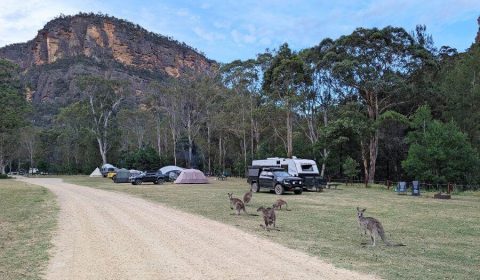
If you prefer sleeping closer to nature, I’ve written a detailed Blue Mountains Camping Guide covering the best campgrounds, costs, facilities and family tips.

Carrington Hotel (Katoomba) – best for historic charm
Best for: Couples, first‑time visitors, train travellers
If you want to stay somewhere with character, the Carrington Hotel is hard to beat. This heritage‑listed hotel sits right in the heart of Katoomba and combines grand architecture with modern comfort.
Advantages of staying here:
- 2 minutes from Katoomba train station
- Walking distance to restaurants and cafes
- Classic heritage interiors
- On‑site restaurant and bar
👉Check availability at the Carrington Hotel here.
YHA Blue Mountains Katoomba – best budget stay in Katoomba
Best for: Budget travellers, hikers, families wanting private rooms
For a budget‑friendly stay without compromising on comfort, YHA Blue Mountains Katoomba is one of the best‑rated options in town. Don’t let the word “hostel” put you off — YHA offers both dorm beds and private rooms, making it suitable for solo travellers, couples, and families.
Advantages of staying here:
- Walking distance to Katoomba town centre
- Free parking (a big plus in busy seasons)
- Large communal kitchen
- Outdoor terrace and BBQ area
It’s a practical and friendly base if your focus is hiking rather than luxury.
👉Check availability at YHA Blue Mountains Katoomba here.

Kyah Motel (Blackheath)
Best for: Canyon hikers who want quiet evenings
If your focus is canyon walks like the Grand Canyon Track or Porters Pass, staying in Blackheath saves driving time.
The newly renovated Kyah motel lets you close to nature, sitting on two acres of beautifully landscaped gardens. It’s a bit of a drive from the center of Blackheath, but the quiet backstreet is truly peaceful, ideal for those preferring a quieter stay.
Advantages of staying here:
- Solitude and proximity to nature
- Outdoor hot tub & on-site sauna
- Well-rated on-site restaurant
👉 Check availability in Kyah Motel here.
Should you stay in Katoomba or Blackheath?

If it’s your first time in the Blue Mountains, stay in Katoomba.
If you want:
- Fewer crowds
- Easier access to canyon trails
- A quieter evening atmosphere
Choose Blackheath.
Both are within 15–20 minutes of each other by car, so you can’t really go wrong.
Pro tip: Book early for weekends and school holidays as accommodation fills up. The spring wildflower season is also popular.
Where NOT to stay (if it’s your first visit)

Not every town in the Greater Blue Mountains area is ideal for a short 3‑day itinerary. If it’s your first time visiting, I’d avoid staying too far west or too remote unless you specifically want solitude.
Lithgow (unless you’re road‑tripping further west)
Lithgow is more industrial and serves as a gateway to other regions like Wollemi or Mudgee. While accommodation can be cheaper, it’s 40–50 minutes from the main attractions around Katoomba and Blackheath. For a short stay, that daily driving adds up.
Extremely remote cabin stays (unless you want total seclusion)
There are beautiful, secluded stays deep in the bush — but they often mean:
- Long unsealed road access
- 30–60 minute drives to main walks
- No nearby restaurants
If your priority is hiking the classics and seeing iconic lookouts, you’ll waste precious time commuting. Save those remote stays for a slower, second visit.

Staying too close to Echo Point (if you value quiet evenings)
While staying near Echo Point sounds convenient, it’s the busiest area in the Blue Mountains during the day. Traffic and parking congestion peak between 10am–3pm.
If you prefer a quieter evening atmosphere, choose central Katoomba, Leura, or Blackheath instead.
Day 1: Classic Blue Mountains highlights
Today is about the iconic first impressions — the kind that make you stop mid‑sentence and just stare.
Morning: Prince Henry Cliff Walk & Echo Point

Start your trip early — ideally before 9am — and head to the Prince Henry Cliff Walk.
There’s something special about seeing the Blue Mountains in the morning light. The valleys are often still wrapped in a soft blue haze (hence the name, yes), and the cliffs glow orange as the sun rises higher.
This walk stretches along the edge of Jamison Valley, connecting Katoomba Falls Lookout to the Three Sisters. It’s one of the most scenic and accessible trails in the region — just as perfect an introduction to the scale of the landscape as to bushwalking in the Blue Mountains.
As you follow the path, you’ll pass:
- Sweeping views over the eucalyptus‑covered Jamison Valley
- Katoomba Falls lookouts
- Cliff‑edge lookouts with sheer drops (but fenced)
- Cascading streams lined with ferns
- Katoomba Cascades

The elevation change is minimal compared to other Blue Mountains hikes, which makes it ideal for your first morning. You’ll feel immersed in the scenery without exhausting yourself before lunch.
The final stretch brings you to Echo Point, where the Three Sisters rise dramatically from the cliff face. Yes, it’s popular — and for good reason. Arriving early means you can experience it before the tour buses arrive.
There’s a parking lot directly by Echo Point, but I highly recommend approaching it from the Prince Henry Cliff Walk. This way you’ll get a diverse experience of the Blue Mountains instead of just one (albeit stunning) lookout.
For detailed parking tips, walk details and optional detours (like the Underfalls Walk when open), see my full guide to the Prince Henry Cliff Walk here.
Afternoon: Wentworth Falls Lookouts Loop

After lunch, drive about 10–15 minutes to Wentworth Falls. If the morning walk introduced you to the scale of the landscape, this hike brings you into it.
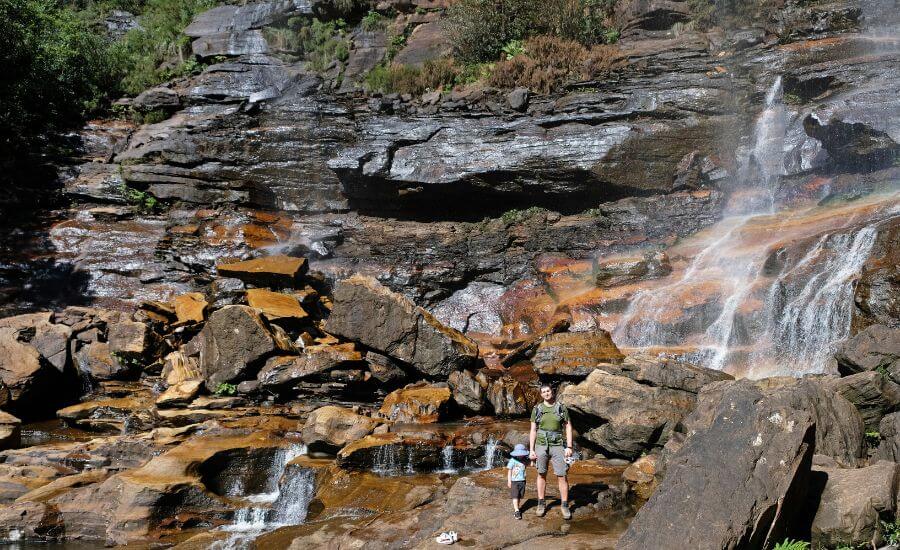
The Wentworth Falls Lookouts Loop is short — around 2.6 km — but it’s dramatic from start to finish. The main attraction is the 187‑metre Wentworth Falls plunging into the valley below, but I like the dramatic cliff walls and valley views just as much.
From Fletchers Lookout, you’ll get a close view of the waterfall framed by towering sandstone cliffs. Then comes the Grand Stairway — a steep descent carved directly into the rock face.

The sound of rushing water grows louder, and when you reach the lower cascades, you might even take a shower under one of the cascades (which looks very photogenic, but the water is cold!). Also, you’re inside the canyon at this point.
What I truly appreciate about this trail is that the climb back is just as astonishing. Cliff overhangs will loom above you, and scenic lookout points (the Princes Rock Lookout being my favourite) will be good excuses to stop from time to time.

Proper hiking boots with good grip are essential here, especially after rain as the smooth rock faces tend to become extremely slippery.
If you enjoy waterfalls and dramatic canyon scenery, this is one of the most rewarding short hikes in the Blue Mountains. See my detailed Wentworth Falls loop description here.
Sunset: scenic cliff-top lookout

After a full day of hiking, sunset calls for something simpler. Instead of returning to Echo Point, drive to one of the quieter cliff‑top lookouts:
- Cahill’s Lookout & Boar’s Head Lookout (15 minutes from Wentworth Falls, in Katoomba): These twin viewpoints offer wide‑open valley views with far fewer people.
- Lincoln’s Rock (10 minutes from Wentworth Falls): Famous for its uninterrupted view over Jamison Valley. The flat rock platform glows golden as the sun dips behind the escarpment. However, it has been recently closed until further notice — see the details here.
For more scenic lookout options, including lesser‑known sunset spots, see my full guide to the Best Blue Mountains lookouts.
Day 2: Canyon adventure & Blackheath
After the first day gave you quite a rich introduction to the Blue Mountains, the second day takes it to a much deeper level — literally. Sandstone walls will tower above you, you’ll hear water trickling through the moss‑covered cracks, and the air will truly feel cooler. It’s canyon day!
Morning: Grand Canyon Track (Blackheath)


Drive to Blackheath early and park at the Grand Canyon car park along Evans Lookout Road (not the small Evans Lookout car park).
The Grand Canyon Track is one of the most memorable hikes in the Blue Mountains for many visitors — and it certainly lives up to its name. It truly feels grand.
You’ll begin the descent from Evans Lookout after taking in the sweeping views of the valley below. Within half an hour, the landscape changes completely. Instead of open cliff tops, you’ll pass through lush pockets of rainforest and cross small streams, walking beneath moss‑covered overhangs where the temperature suddenly drops and water trickles down the rock walls.

Soon, towering sandstone walls rise on both sides. You’re in the canyon. Seasonal waterfalls cascade down the vertical rock faces, and the fern‑filled gullies feel almost prehistoric.
The 6 km loop includes some steep descents and climbs, but it’s technically straightforward. There’s no scrambling required — just steady staircases and well‑formed paths.
Most of the track remains shaded beneath the canopy, making it surprisingly pleasant even on warmer days. It’s cool, damp, and completely different from the exposed cliff‑top walks of the previous day.

If you’re looking for an even more adventurous canyon experience — abseiling, swimming through narrow slots, and exploring sections inaccessible on foot — you can join a guided Blue Mountains canyoning tour (all equipment included, though it doesn’t take place in the Grand Canyon).
That said, this walking track alone is an adventure to remember. For more details, see my Grand Canyon Track hiking guide.
A quieter alternative to Grand Canyon: Porters Pass & Centennial Glen


If you’d prefer something less busy — or if you have energy for a second hike — head to Porters Pass & Centennial Glen. This 4.4 km loop offers a similar canyon atmosphere but with noticeably fewer people.
Here, you’ll find:
- Towering vertical sandstone walls and deep valleys
- Narrow rainforest gullies
- A hidden slot canyon waterfall
- The Cliff Top Track and the Fort Rock viewpoint overlooking Megalong Valley

One of the highlights is the small slot canyon tucked behind a rock overhang — a place that feels secret and unbelievably theatrical when sunlight filters through.
This track feels harder than what the distance would suggest, but it’s very rewarding.
Afternoon: Walls Cave & hidden corners of Blackheath
After lunch, explore some of Blackheath’s quieter spots.
Walls Cave


Walls Cave is a short, lesser‑known track that starts along the Evans Lookout Road and leads to a large sandstone cave tucked beneath an overhang. But my favourite attraction is along the way: a hidden slot canyon you can walk in.
It’s a steep track, but the peaceful bushland and the atmospheric canyon and cave at the bottom are worth the effort.
Horseshoe Falls from Govetts Leap Lookout

From Govetts Leap Lookout, walk part of the Pulpit Rock Track toward Horseshoe Falls. This waterfall has the second-highest drop of all the Blue Mountains waterfalls, plunging dramatically off the cliffs. You can marvel at it from several lookouts along the Pulpit Rock Track.
While the final section of the full Pulpit Rock Track has been closed for years, the accessible portion still offers dramatic cliff‑edge views over Grose Valley and Horseshoe Falls.
Two Falls Lookout, Horseshoe Falls Lookout, Bradleys Lookout, and Cripps Lookout are all located close to one another. You might expect this 900 m stretch along the clifftop to be relatively flat — but it’s actually quite undulating. Fortunately, the scenery more than rewards the effort. The sandstone cliffs glow warm in the afternoon light, and the valley feels wide and open compared to the enclosed canyon trails earlier in the day.
Evening: Govetts Leap Lookout

End the day at Govetts Leap Lookout. Looking directly across Grose Valley from the edge of the escarpment toward distant cliffs layered in blue haze, this is the most picturesque lookout in the Blue Mountains. As a bonus, Bridal Veil Falls plunges dramatically down the rock face in the distance.
Golden hour is the best here. The colors of the cliffs deepen into rust tones, and as the sun lowers, shadows stretch across the valley floor. It’s also quieter than Katoomba at sunset.
Bring a warm layer though — Blackheath sits slightly higher and cooler than Katoomba, and temperatures drop quickly once the sun disappears.

Day 3: Waterfalls & lesser-known tracks
After two days of cliff edges and canyon walls, today keeps you close to the water. If you’re based near Wentworth Falls, everything will be within a short drive of each other, making it an easy and relaxed final day.
Morning: Valley of the Waters Track & Sublime Point Lookout

Before we jump in, let me clarify that The Valley of Waters has been partially closed for several years now (ever since we moved to Sydney). But it’s open until the first two waterfalls — Empress Falls and Sylvia Falls — and they’re enough to make it one of my favorite waterfall trails in the Blue Mountains.
Start early at the Conservation Hut car park and descend into the valley. This track is short — but don’t underestimate it, because it’s steep downhill.
The highlights of this track are not only the waterfalls, but also:
- Moss‑covered rock walls and overhangs
- Fern‑lined staircases
- Narrow dirt sections between metal ladders
- Small streams and the sound of water around you

The descent is steep, with long stair sections and a few metal ladders, so proper hiking shoes with grip are essential — and stamina.
Soon you reach Empress Falls, a 30‑metre cascade pouring into a deep pool below. Unlike some of the taller but thinner waterfalls in the Blue Mountains, Empress Falls feels full and energetic year‑round.
Continue a little further to Sylvia Falls, a series of graceful cascades framed by greenery. This is the turnaround point, because the path further into the valley is closed.
Before leaving the area, stop at Sublime Point Lookout to enjoy a wide‑open valley view again. This contrast between enclosed canyon and sweeping escarpment sums up the Blue Mountains perfectly.
Early afternoon: Minnehaha Falls


After lunch, drive about 10 minutes to the Minnehaha Falls trailhead.
This is a 1.2 km one‑way walk from the Minnehaha Reserve Car Park (on the edge of Katoomba) — and it’s entirely downhill on the way there. The path is straightforward but moderately steep, so (again) remember: what goes down must come back up.
At the end, you’re rewarded with one of the most picturesque swimming holes in the Blue Mountains. Minnehaha Falls spills into a wide rock pool surrounded by smooth sandstone slabs. On warm days, you’ll likely see swimmers gathered near the base of the waterfall.
However, the water is cold — very cold. My husband ventured in and lasted about two minutes. Born‑and‑bred Australians seem to handle it much better. Alternatively, you can sit on the rocks and enjoy a picnic. Take your time and soak up the atmosphere.
If hiking feels like too much after two active days, you could swap this for scenic viewpoints instead. See my guide to easy‑access Blue Mountains lookouts (no hiking required) for beautiful alternatives without steep descents.
Late afternoon: Paradise Pool (Linden)

For your final stop, head back towards Sydney, and stop at Linden to walk to the Paradise Pool.
This 1.3 km one‑way track feels even more local than the other stops. The path winds gently downhill through bushland before opening to a wide creek bed.

Paradise Pool isn’t about dramatic waterfalls — it’s a lovely, calm waterhole with a (mostly) sandy bottom. You can swim under the waterfall, or simply sit on the shore, reflecting on the last three days, and let the pace slow down completely.
How to get to the Blue Mountains from Sydney

Getting to the Blue Mountains is easy — which is one of the reasons it’s such a popular escape from Sydney.
By train
Direct trains run regularly from Sydney Central to Wentworth Falls and Katoomba. The journey takes about 2-2.5 hours and drops you right in the heart of the main visitor area.
If you’re staying in Katoomba and focusing on Prince Henry Cliff Walk, Echo Point, and Wentworth Falls, travelling by train works well.
Blackheath can also be reached by train. However, the trailheads are spread out and far from the train station, so I recommend driving if you want to include the Blackheath area.

By car
Driving takes about 1.5–2 hours, depending on traffic. Having your own car gives you much more flexibility.
It allows you to:
- Reach quieter trailheads
- Start hikes early
- Explore areas like Blackheath without relying on taxis
- Move easily between different sections of the park
I usually use DiscoverCars on our travels to compare car rental prices.
What to pack for a 3 day Blue Mountains trip

The Blue Mountains reward good preparation. Weather can change quickly, and many tracks involve steep sandstone stairs and uneven terrain.
Here’s what I never hike without:
- Waterproof hiking boots – sandstone becomes surprisingly slippery after rain, and many steeper rainforest sections remain muddy after rains
- Lightweight rain layer – showers move through quickly
- 2L hydration pack or water bottle – some hikes are shaded but still demanding
- Sun hat & sunscreen – cliff‑top sections are exposed
- Snacks – especially for longer canyon walks
Even in summer, mornings can feel cool in the valleys, and in winter temperatures drop quickly after sunset.
Grip matters here. Proper footwear makes a noticeable difference on the steep sections of Wentworth Falls, the Grand Canyon and the Valley of the Waters.
3 day Blue Mountains itinerary with kids

The Blue Mountains are surprisingly family‑friendly if you choose the right trails and pace.
If you’re visiting with children, here’s a simplified version of this itinerary:
- Day 1: Katoomba Scenic World (optional) + partial Prince Henry Cliff Walk + Echo Point
- Day 2: Scenic drive through Blackheath + easy cliff‑top lookouts (like Evans Lookout and Govetts Leap) + Horseshoe Falls walk from Govetts Leap
- Day 3: Valley of the Waters + Paradise Pool
Most major tracks have good fencing along cliff edges, but supervision is essential.
Ultimately, the realistic hiking options depend on your kid’s age, stamina and hiking experience. Older kids who regularly hike can likely complete all the trails mentioned in this 3 day itinerary. We hiked all of these trails with a kid, I might add.
Final thoughts

Spending three days in the Blue Mountains allows you to move beyond the rushed day-trip experience and truly connect with the landscape. You’ll see dramatic cliffs, lush canyons, flowing waterfalls, and panoramic valley views. You’ll conquer elevation — often downhill first, and uphill afterwards. And you’ll likely leave planning your next visit.
If you’re visiting in spring, don’t miss my guide to the best Blue Mountains wildflower walks — from easy flower-filled strolls to dramatic ridge hikes with big escarpment views.
Planning your trip?
Last updated: June 2026
All hikes personally completed multiple times since 2023.

FAQ about spending 3 days in the Blue Mountains
Yes. Three days allows you to see major highlights, hike into at least one canyon, visit waterfalls, and explore quieter areas beyond Echo Point.
Yes. Several scenic lookouts are accessible with minimal walking. However, hiking is the best way to experience the landscape up close.
The Blue Mountains are suitable year-round. Autumn and spring offer the most comfortable temperatures and fewer crowds compared to peak summer weekends.
Not necessarily, but it provides more flexibility. Trains from Sydney reach Katoomba and Wentworth Falls, but remote lookouts and canyon tracks require driving.
Katoomba is the best base for first-time visitors. Blackheath is ideal for canyon hikes and quieter surroundings.
Leave a Reply