
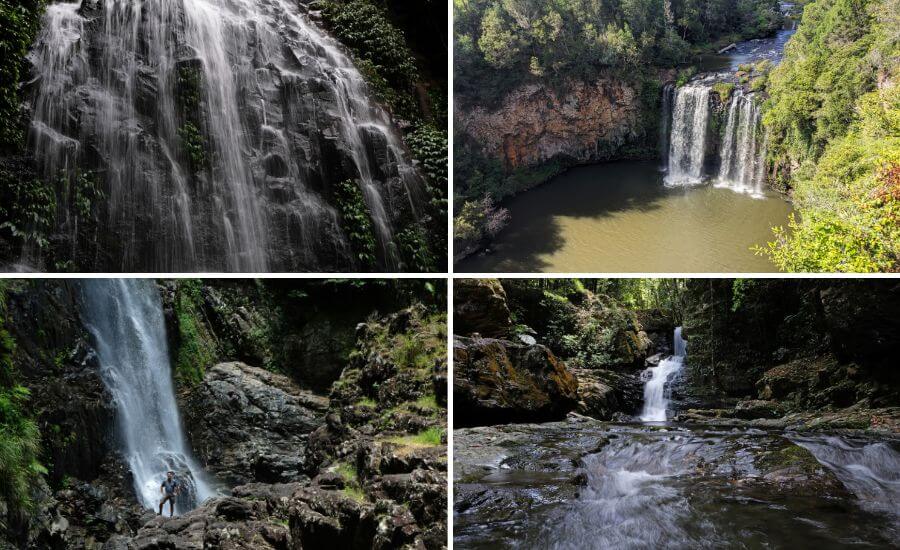
NSW’s Waterfall Way stole my heart with its name alone. This scenic drive links the Mid North Coast with the New England Tablelands, and it’s a journey through rainforests, deep gorges and some of the most beautiful waterfalls in New South Wales — on days when those waterfalls feel cooperative.
I have to admit that our first Waterfall Way road trip was a mix of loud wows and quiet disappointments. Some of the tallest waterfalls need decent rain to really show up, and we weren’t particularly lucky. Even though summer can bring plenty of rain to this part of New South Wales, not every year delivers.
But the waterfalls we did see were breathtaking! And the scenic drive itself more than made up for it. The Waterfall Way stands out among the many scenic routes across NSW thanks to its accessible attractions, good‑quality roads and manageable length. You don’t need to be a hardcore hiker, and you don’t need to rush. Many of the best spots are just a short walk from the car, yet they still feel wild and immersive.
This guide is for nature lovers, families, and slow travellers who enjoy waterfalls, bushwalks, picnic stops and travelling at a relaxed pace. Whether you have one day or one week, this post has all the practical details you need.
What is the Waterfall Way (and where is it)?

The Waterfall Way is a sealed scenic road that runs between Coffs Harbour (via Bellingen) on the Mid North Coast and Armidale in the New England Tablelands. Along the way, it climbs from subtropical rainforest into cooler high‑country landscapes, passing through New England, Oxley Wild Rivers and Dorrigo National Parks and several smaller reserves.
On a map, the Waterfall Way is only about 185 kilometres long. In reality, it stretches much further — every waterfall lookout, short bushwalk and picnic stop adds another reason to slow down. You could drive it in a few hours, but the Waterfall Way makes far more sense as a full day out, or even better, spread over two or three unhurried days. For avid hikers, even a full week is reasonable.
Most travellers start from the coast, but it works just as well in reverse.
Quick summary: Waterfall Way highlights at a glance
Three waterfalls worth prioritising
Easy to access and most likely to be flowing even during drier periods:
- Dangar Falls, near Dorrigo
- Crystal Shower Falls, Dorrigo National Park
- Ebor Falls, Guy Fawkes River National Park
Three good places to stay along the Waterfall Way
Well‑located options that work particularly well for a multi‑day visit:
- Lookout Mountain Retreat, Dorrigo (rooms and self‑contained villas)
- Dorrigo Bush Pepper Retreat, Dorrigo (holiday home)
- Country Comfort Armidale, Armidale (rooms and suites)
Best time to drive the Waterfall Way
You can visit the Waterfall Way year‑round, but the experience shifts noticeably with the seasons — and so do the waterfalls.
After rain is when the route truly comes alive. Waterfalls that might barely trickle during dry spells suddenly turn powerful, loud and dramatic. Some of the tallest falls can dry out almost completely in drier periods, so timing does matter if waterfalls are your main reason for coming.
Summer is typically the wettest season, especially in the rainforest sections around Dorrigo. Heavy rain isn’t guaranteed every year, but when it does arrive, this is when the waterfalls are at their most impressive. Summer is also warmer and more humid, which makes swimming at some waterfalls very tempting.

Spring and autumn bring comfortable temperatures for walking, the rainforest is lush, and the crowds are thinner than during the summer holiday. If you’re planning to camp, the period from mid‑spring to mid‑autumn offers the best balance of weather and conditions.
Winter brings crisp air on the tablelands and cooler mornings, especially around Armidale. Swimming is less appealing (to me, anyway), but daytime temperatures are still pleasant for walking, and the scenery remains beautiful.
If you’re visiting after heavy rain, keep an eye on weather forecasts and road conditions, and expect leeches on rainforest tracks. It’s all part of the ecosystem — good to know in advance, even if fully embracing them takes a bit of practice.
Waterfall Way road trip: best stops in order
These are the stops that stood out to me most along the Waterfall Way, travelling from the coast up towards Armidale. To make this guide easy to customize, I’ve marked each stop by what kind of experience it offers — whether it’s a quick stop, a lookout, a longer hike or a swimming spot — so you can mix and match depending on how much time and energy you have.
I’ve also included a few stops in Oxley Wild Rivers, Apsley Gorge and New England National Parks. They’re not strictly on the Waterfall Way, but they’re easy extensions if you have extra time and want to explore a little further, like we did.

Short stop: Dorrigo Rainforest Centre & Skywalk Lookout, Dorrigo National Park
The Dorrigo Rainforest Centre is the obvious starting point for exploring Dorrigo National Park. Even if you’re not planning a long walk, it’s well worth stopping here for the exhibition, the Skywalk lookout and the adorable pademelons.
The Skywalk Lookout is right behind the Rainforest Center, and it extends out over the escarpment, offering sweeping views over the rainforest and back towards the coast on clear days.

If you’re visiting later in the day, it’s worth walking to the Pademelon picnic area near the Rainforest Center. We spotted a mob of pademelons grazing near dusk, as we were preparing our dinner on the picnic tables — one of my favourite memories from Dorrigo! Oh, what a pademelon is, you ask? Imagine a small wallaby with a quokka-like face. It’s yet another cute native Australian marsupial you have to meet.
Quick facts:
- Facilities: Toilets, picnic tables, café at the Rainforest Centre
- Walking tracks: a few hundred meters walk to Skywalk Lookout, several options for the Wonga Walk and Crystal Shower Falls
- Family‑friendly? Yes, pram‑friendly around the Skywalk, offers shorts walks and a good chance to meet with wildlife
Parking at the visitor centre can fill up quickly during busy periods. If that happens, Glade picnic area is a good alternative parking spot, being just a short walk (a magical rainforest walk!) away from the Rainforest Center.
Longer hike: Wonga Walk, Dorrigo National Park
I’ve seen some spectacular rainforests across New South Wales, but the Wonga Walk takes it to another level. The Gondwana rainforest here is among the oldest on Earth, and walking beneath its towering trees, hanging vines and lush ferns feels like stepping back into prehistoric times.


As if the green cathedral above your head weren’t enough, the forest is alive with wildlife and an almost constant soundtrack of birdsong. We caught glimpses of several tropical birds, though spotting them requires a bit of luck, quiet patience — they’re shy and quick to vanish into the canopy.
The Wonga Walk also passes two beautiful waterfalls that would make the hike worthwhile on their own. Tristania Falls thunders down a cliffside and first appears at the bridge; just beyond it, a short side trail leads to a close‑up view of the falls, a lovely picnic spot if conditions are dry (and if you don’t mind the occasional enthusiastic leech). A little further on is Crystal Shower Falls, where a metal boardwalk takes you behind the cascading water and onto a suspension bridge with wonderful views back into the rainforest.

The Wonga Walk includes a few gentle ups and downs, but overall it’s an easy, well‑maintained track, much of it paved. Allow around two hours to complete the 6 km loop — not because it’s demanding, but because the rainforest is so captivating that it’s hard to stop looking, listening, and taking photos.
Even during drier periods, the forest here stays lush, and the small waterfalls and creeks usually continue to flow. It’s one of the reasons Dorrigo National Park remains such a reliable and rewarding stop year‑round. Also, embrace leeches.
Quick facts:
- Facilities: Toilets at nearby picnic areas
- Trailhead: Rainforest Center or Glade picnic area
- Track length: ~6.6 km loop
- Family‑friendly? Yes, the elevation gain is minimal, the track is mostly paved, and there are shorter options (only the Walk with the Birds boardwalk, or turning back from Crystal Shower Falls)
- Where to stay? Lookout Mountain Retreat sits just outside Dorrigo and works well as a peaceful base for a longer stay.
Short stop & swimming spot: Dangar Falls, Dorrigo National Park
Dangar Falls is one of the most impressive waterfalls along the route, and it’s such an easy stop after reaching the Dorrigo plateau. Strictly speaking, it’s not inside Dorrigo National Park, but it’s a 10-minute drive from the Rainforest Centre (and only a few kilometers north of Dorrigo town).

We could admire the 30-metres waterfall plunging into a deep gorge from the fenced lookout right by the parking lot. There’s a short walk down to the base if you want to get closer, or have a refreshing swim in the pool.
Quick facts:
- Facilities: Toilets, picnic tables, BBQ
- Walking track to the pool: ~1 km return walk from the Dangar Falls Picnic Area
- Family-friendly? Yes, there’s a small playground, BBQ and picnic tables near the lookout, making this a good place to break the drive.
Important note: Don’t confuse Dangar Falls with Dangars Falls and the Dangars Falls walking track in Oxley Wild Rivers National Park — which can also be great stops along the Waterfall Way scenic drive. But while Dangars Falls is a seasonal waterfall that only flows after significant rainfall, Dangar Falls maintains a steady flow year-round.
Full‑day hike & swimming spots: Rosewood Creek Circuit & Red Cedar Falls, Dorrigo National Park
If you’re looking for a longer, more adventurous day, the Rosewood Creek Circuit is a standout, leading you into a quieter, more remote part of Dorrigo National Park — the Never Never region — and to what is, in my opinion, the most impressive waterfall in the park.
The Rosewood Creek Circuit is a proper rainforest hike, not necessarily a full-day one, but that depends on the number of swimming stops you make. Being cool, shaded and deeply green, it’s a good fit even on hot summer days. The walk alone is beautiful, with several clear pools along the creek, but the real highlights are the waterfalls hidden along the side tracks.

The first detour leads to Coachwood Falls, reached via a short but steep descent through a forest of coachwood, crabapple and sassafras trees. The waterfall plunges into a narrow, fern‑filled canyon and feels wonderfully enclosed and wild.
Further on, another side track branches off towards Red Cedar Falls. This one involves a steeper, zig‑zagging descent through towering red cedars and bangalow palms (and yes, you’ll need to climb back up the same way). You’ll hear the waterfall before you see it, then arrive at the sight of white water crashing over a moss‑ and fern‑covered cliff into a boulder‑strewn pool below.

Red Cedar Falls is the largest waterfall in Dorrigo National Park, and it’s a fantastic place to stop for a picnic, or a swim beneath the falls. However, flow strength depends on recent rainfall, so be careful after heavy rains.
Good hiking shoes (like the Columbia Newton Ridge models) are essential for this walk. If the forest is wet, expect leeches. (I hate them, I passionately do, and we got so tired of removing them on this track. Still, all the beauties made it worth it.)
Quick facts:
- Facilities: Toilets at trailhead
- Trailhead: Never Never Picnic Area (last ~7 km via unsealed road)
- Track length: ~8.2 km loop
- Swimming: pools along the creek and the pool below Red Cedar Falls (conditions permitting)
- Family‑friendly? Best for experienced walkers and older children
- See the trail map here.
Optional addition: New England National Park stops
New England National Park sits about a 20‑minute detour off the Waterfall Way, so it’s best seen as an extension rather than a must‑do stop. If you’re short on time and only have a day or two, I’d skip it and focus on the waterfalls closer to the road.
This park isn’t the place to come chasing dramatic waterfalls — they’re not that high, and many of them only flow well after decent rain. But if what you’re really after is a quieter rainforest experience, New England National Park is a joy. The walking tracks wind through fern‑filled forest and follow gently babbling creeks, and we often had entire sections to ourselves.

It’s a lovely place to slow down, especially if you’ve already ticked off the main Waterfall Way highlights and want something more peaceful and less visited. Spend a few days in a forest cabin or camp at Thungutti campground in the park rather than trying to squeeze these walks into a single Waterfall Way day trip. Toms Cabin is along the Robinsons Knob Track (unsealed, but fine for most cars), and The Residence is at Banksia Point.
Let’s see those walks then:
Short stop: Point Lookout
Point Lookout is the highest point in New England National Park and offers one of the most expansive views along the entire Waterfall Way region. From here, the land drops away dramatically towards the coast, with layer upon layer of forested ridges stretching into the distance.
It’s an easy stop right by the car park and well worth it.
Longer hike: Wrights Lookout and the Cascades

This walk combines wide, open views from Wrights Lookout with a series of gentle cascades and Five Day Creek Falls further along the track. We started on the Robinsons Knob Track and took the detour out to the lookout first, then continued on to include the Cascades Walk on the way back, which forms a pleasant loop branching off the main track. Depending on how much time and energy you have, you can walk either section on its own or combine both.
Overall, we found this route varied and enjoyable. While many waterfalls in New England National Park rely heavily on recent rain, the creek here usually holds at least some flowing water, even in drier periods — which makes this walk a more reliable option than most in the park.

Quick facts:
- Facilities: Toilets at trailhead
- Trailhead: Robinsons Knob Trailhead
- Track length: ~6.7 km return
- Family‑friendly? Best for experienced walkers and older children
- Where to stay? Toms Cabin, a cozy cottage along the Robinsons Knob Track
- See the trail map here.
More New England hikes: Tea Tree Falls, Lyrebird Track, New England Wilderness walk
If you’re travelling slowly and have more than a day to spare, New England National Park offers a network of lovely rainforest walks. Tracks like Tea Tree Falls and the Lyrebird Track are rewarding shorter hikes through tall rainforest and along quiet creeks, best enjoyed for their atmosphere rather than guaranteed waterfall views.
For experienced bushwalkers, the New England Wilderness Walk is a multi‑day route that links the New England Tablelands to the headwaters of Bellinger River. This is proper wilderness walking, with long distances, limited facilities and designated remote campsites along the way. It’s not something to add casually to a Waterfall Way road trip, but it’s worth knowing about if you’re planning a longer hiking-focused visit to the region.
Short stop: Ebor Falls, Guy Fawkes River National Park

Ebor Falls is an easy and rewarding stop just off the Waterfall Way. A short walk leads to multiple lookouts over the upper and lower falls as they drop into a rugged gorge. Even during drier periods, the falls usually maintain some flow, and the gorge itself is impressive regardless.
Quick facts:
- Facilities: Toilets, picnic tables
- Walking required? Short, easy paths
- Family‑friendly? Yes!
Short stop: Wollomombi Falls Lookout & walking track, Oxley Wild Rivers National Park

Half an hour drive from Ebor Falls towards Armidale and just a few minutes drive off the Waterfall Way, Wollomombi Falls plunges into one of the deepest gorges in Australia. The lookout is only a few steps away from the picnic area, so it could deliver instant drama with very little effort. A classic “park, walk, wow” stop, you’d think. Except that during dry periods (our situation), the flow can be reduced to a trickle which you won’t see from the distance. The scale of the gorge still makes this stop worthwhile.
For those wanting to enjoy more waterfall views, the Wollomombi Walking Track takes you to further lookout points at the top of the gorge. It ends at Chandler Falls lookout, which is another waterfall we weren’t lucky enough to see. There’s no way down to Wollomombi Gorge.
Quick facts:
- Facilities: Toilets, picnic tables
- Walking required? Minimal to the lookout; the Wollomombi walking track is 4 km return
- Family‑friendly? Yes, the picnic area is spacious and has several BBQs and benches, great for a lunch break
Short stop: Edgars Lookout, Oxley Wild Rivers National Park
Edgars Lookout is a few minutes drive from the Wollomombi picnic area, and there’s no waterfall here to cause disappointment (or maybe we didn’t realize it). It offers wide views across the gorge system and is an easy stop. The lookout is right by the parking lot.
Quick facts:
- Facilities: all facilities are at the nearby Wollomombi picnic area
- Walking required? No, but the lookout is connected to the Wollomombi campground by a short bushwalk.
- Family‑friendly? Yes.
Optional addition: more Oxley Wild Rivers National Park walks
The highlights of Oxley Wild Rivers National Park are spread across several different areas. While Wollomombi Falls sits close to the Waterfall Way, other sections of the park are best accessed after you pass through Armidale. They’re not strictly on the Waterfall Way, but they’re close enough to make worthwhile extensions if you have extra time.
After decent rainfall, stopping at Dangars Falls can be genuinely spectacular, with water thundering through the gorge. In drier periods, the experience is more subdued and similar to Wollomombi Falls — dramatic canyon views, towering cliffs and only a light trickle of water.
Let me show you the walks and views we enjoyed:
Short stop (with longer option): Dangars Falls

Dangars Falls is a tricky one. After heavy rain, it becomes a powerful cascade, but during dry periods, it may not exist at all. I still found the canyon carved by the water striking.
There are several lookouts here, so this could either be a really quick lookout stop, or a 30-60 minutes walk. All the lookouts are located along the canyon rim, there’s no way down to the gorge. Here they are, in order and with my comments:
- Falls Lookout : 100 m one-way; very easy and rewarding!
- Falls View: 350 m one-way
- Falls Look Down: 850 m one-way; you can turn back here to keep it short, with only the most stunning lookouts included
- Rock Wallaby Lookout: 1.1 km one-way; a decent lookout, but doesn’t compare to the first three
- McDirty’s Lookout: it would require a longer walk and we decided it’s not worth doing
Quick facts:
- Facilities: Toilets, picnic tables
- Walking options: Short lookout walk or longer, undulating canyon rim walk
- Family‑friendly? Yes, for the first three lookouts
Short stop: Blue Hole Picnic Area

If you’re eager to find water in the Oxley Wild Rivers National Park during a dry period, your best bet is the Blue Hole picnic area. It’s right by the Gara River, which has a decent flow any time of the year. It didn’t seem like a typical swimming spot to me (the water was too shallow, full of rocks and plants), but you could splash in the water if you’re desperate on a hot day.
We enjoyed our riverside BBQ and solitude here, and the lovely Therfall walking track. The birds are amazing!
Quick facts:
- Facilities: Picnic tables, BBQ, toilets
- Walking required? No, the picnic area is right by the parking lot
- Family‑friendly? Yes
Longer hike: Threlfall Walking Track (Gara Gorge)
The Threlfall Walking Track follows the Gara Gorge and combines gorge views, riverside sections and quiet bushland. It’s a rewarding walk, especially if you enjoy longer, scenic trails rather than waterfalls alone. We saw parrots, honeyeaters, fairy wrens and kangaroos along the way.
Quick facts:
- Trailhead: Blue Hole picnic area
- Track length: ~5 km return
- Family‑friendly? Best for older children, because the terrain is undulating
Optional addition: Apsley Gorge National Park walks
Apsley Gorge National Park isn’t directly on the Waterfall Way, but I’ve included it here because it fits so naturally into a longer trip through this part of NSW. The gorges and waterfalls are on a similar scale to some of the highlights along the route, and it’s only about an hour’s drive south of Armidale along the B56 — close enough to feel like a detour, not a separate journey.
What I really like about Apsley Gorge is how little effort is needed for such big scenery. Several of the walks are short and easy, yet still deliver those wide, dramatic views that make you stop and stare. If you’ve got a bit of extra time and enjoy places that feel rewarding without a long hike, this is a very easy addition to make.

Short stop: Apsley Falls & Gorge Rim Trail
The Gorge Rim Trail offers easy access to the Apsley Falls Lookout and several more viewpoints without committing to a long hike. I don’t distinctly remember each lookout — and that’s because they’re all close together and similarly impressive. The sense of scale, though, depends on the weather. During dry periods, the waterfall itself may disappear, but the gorge remains vast and dramatic.
Quick facts:
- Facilities: Toilets, picnic tables, BBQ
- Walking required? Short walk to Apsley Falls Lookout; the Gorge Rim loop is ~1 km
- Family‑friendly? Yes
Longer hike: Oxley Trail
The Oxley Trail takes you to the other side of the gorge rim and offers a different perspective on Apsley Falls. It begins by crossing the Apsley River on a bridge, then continues past Oxley Lookout and Chasm Lookout before ending at Slate Walls Lookout. When the waterfall is flowing, this walk gives you some of the best views of Lower Apsley Falls, along with excellent views of the upper falls from a slightly different angle.

The trail starts from the same car park as the Gorge Rim Trail, and while it’s a little longer and involves some gentle elevation gain, it’s still an easy, very rewarding walk.
Quick facts:
- Facilities: Toilets, picnic tables, BBQ at trailhead
- Track length: ~3 km return
- Family‑friendly? Yes
- See the trail map here.
Short stop: Tia Falls Walk

If Apsley Falls isn’t playing along, it’s worth driving about 20 minutes further to reach the Tia Falls lookout in another part of the park. Tia Falls is much more reliable — even during dry spells, there’s usually still plenty of water coming over the edge, and the gorge views are impressive no matter what. The falls are seen from a bit further away than at Apsley, but it’s an easy, low‑effort stop that tends to feel worthwhile.
Quick facts:
- Facilities: Toilets, picnic tables
- Walking required? Short, easy path to several lookouts (~1.5 km return)
- Family‑friendly? Yes
Find this guide useful? Say thanks with a coffee!
If you find the articles helpful or inspiring for planning your own adventures, please consider showing your appreciation with a small tip – like buying me a virtual coffee!
Every contribution, no matter the size, helps me stay independent and focused on quality content.
Donate now and make a difference—thank you!
What if you visit the Waterfall Way during a dry period?
Let’s address the obvious: waterfalls are moody. Some show up whenever they feel like it, others need a proper rain event before they make an appearance at all. If you’re visiting the Waterfall Way during a dry spell, it helps to know where to set your expectations — and where to lower them slightly.

Lower Apsley Falls (or the lack of it) during a dry spell
The good news is that Dorrigo National Park is your safest bet. Thanks to its rainforest climate, waterfalls here tend to keep flowing even when rain has been scarce elsewhere. They might not be at their most dramatic, but they’re rarely disappointing. If you’re short on time or planning around dry conditions, focusing on the Dorrigo section of the Waterfall Way is a smart move.
Further west, things get more unpredictable. In New England National Park, many waterfalls rely heavily on recent rainfall. During dry periods, they often reduce to a trickle. The same applies to Oxley Wild Rivers National Park and Apsley Gorge. In these areas, the gorges and views remain impressive regardless, but the waterfalls themselves may be more of a suggestion than a highlight.

If there’s a silver lining, it’s this: even when the water isn’t flowing, the landscapes along the Waterfall Way still deliver. Deep gorges, wide lookouts and peaceful forest walks don’t depend on rainfall, and in dry weather, the tracks are often easier and quieter too.
My dry‑weather itinerary suggestion: base yourself near Dorrigo, focus on rainforest walks and reliable waterfalls there, then treat New England and Oxley as scenery‑first detours rather than waterfall hunts.
What if it’s been raining a lot?
If you’re lucky enough to visit the Waterfall Way after decent rain, you’ll see it at its most dramatic. But it does come with a few trade‑offs.


Obviously, this is when the waterfalls really show off, especially along the tablelands and in Oxley Wild Rivers National Park and Apsley Gorge, where normally quiet cliffs suddenly turn into powerful cascades. Seasonal waterfalls like Dangars Falls or parts of the Oxley system can be genuinely spectacular after heavy rainfall, and this is when those optional detours are most worth the effort.
In Dorrigo National Park, rain also amplifies everything: waterfalls grow louder, water trickles everywhere, and the rainforest feels more alive. On the flip side, tracks can be muddy, leeches become extra enthusiastic, and some walks may be temporarily closed for safety. It’s worth checking conditions before setting out for a hike — or a drive.
Driving after prolonged rain requires even more care. Expect mist, slippery roads and occasional debris. Expect road and trail closures due to high water levels and potential landslides.
Is the Waterfall Way good for families?
Short answer: absolutely — with a bit of planning. Yes, I know. A bit more planning is basically the subtitle of mum life, and it doesn’t magically disappear just because you’re on holiday.

The Waterfall Way actually works surprisingly well for families. Many of the highlights are easy to reach, with waterfalls and lookouts close to the car. Walks are generally short and varied, and there are picnic areas and toilets at most key stops.It’s easy to break the drive into manageable chunks, especially if you’ve packed the usual essentials: snacks that don’t melt, a water bottle for everyone, and something warm to throw on when the rainforest suddenly feels ten degrees cooler.
That said, this is still a landscape shaped by cliffs and water. There are steep drop‑offs, slippery paths and strong currents around waterfalls. Most lookouts are fenced — but, well, never say “that’s impossible”, because someone will try it the very next minute.
Prams work fine on many of the short, often paved lookout walks. On rainforest tracks, though, a carrier is the better option, especially after heavy rain. We also found a lightweight rain jacket and a compact towel handy — partly for swimming, partly for unexpected downpours, and partly because kids have an uncanny ability to end up wet even when swimming wasn’t the plan.

I’ll be sharing a separate, more detailed guide focused specifically on visiting the Waterfall Way with kids, covering things like age suitability, realistic pacing and safety tips. Family travel simply deserves its own layer of thought.
Where to stay along the Waterfall Way
Where you stay along the Waterfall Way will quietly shape how much you enjoy it. Pick the right base, and the trip feels relaxed and unhurried. Pick the wrong one, and you’ll spend a surprising amount of time in the car wondering why you didn’t just stay closer.
Coffs Harbour or Bellingen – tempting, but not ideal
Yes, you can stay in Coffs Harbour or Bellingen and drive the Waterfall Way as a long day trip. And if you’re already based on the coast, it might make sense logistically.
But honestly? This scenic route deserves more than a rushed out‑and‑back drive. If you stay on the coast, you’ll likely skim the highlights, skip the longer walks, and miss the joy of slow mornings and quiet evenings in the rainforest. If you have the flexibility, staying further inland makes a big difference.
That said, if the coast is non‑negotiable, some of the best options for a Coffs Harbour stay are close to Park Beach:
- The pampering choice: Beachpark Apartments Coffs Harbour – with spacious apartments and a great location for beach walks and cafés.
- Best for families: BIG4 Park Beach Holiday Park – with villas and studios in a beachfront setting and plenty to keep kids occupied after a day out.
- Budget-friendly rooms: Ocean Park Motel & Holiday Apartments – could be a more budget‑friendly choice if you choose the smaller studios, and it’s still directly across from Park Beach.
Dorrigo – the sweet spot

If you want to experience the Waterfall Way properly, Dorrigo is the place to stay. It puts you right in the middle of the rainforest section, close to Dorrigo National Park, and makes it much easier to spread the highlights over two relaxed days.
It’s also where early starts feel easier, walks feel less rushed, and evenings are blissfully quiet.
Options are not abundant, but there are some great choices:
- Lookout Mountain Retreat – offering both rooms and self‑contained villas, this is a peaceful base just outside town and works well if you want space and views.
- Dorrigo Bush Pepper Retreat – a lovely holiday home option if you’re travelling as a family or group and want a more private, homely setup after long days of exploring.
Armidale – cool nights and onward travel
Armidale is a great base if you’re planning to explore Oxley Wild Rivers or Apsley Gorge as well. It’s a larger town, so you’ll find more dining options and services, and it works particularly well for multi‑day trips across the tablelands.
Country Comfort Armidale offers comfortable rooms and suites, and it’s an easy, no‑fuss base after a day of hiking or driving.
A quick reality check
Accommodation along the Waterfall Way (especially in Dorrigo and during school holidays) fills up quickly. If you’re travelling in peak periods, booking ahead isn’t just recommended, it’s essential.
Camping along the Waterfall Way

Camping along the Waterfall Way is possible, but it does take a little planning (yes, that sentence probably comes up a lot in this guide). Campsites aren’t dotted neatly along the road, and most options sit a short drive away from the main route. The upside is that many of them are quiet, spacious and surrounded by genuinely beautiful scenery.
A few national park campgrounds make good bases if you’re happy with simple facilities and don’t mind being slightly off the main road. Wollomombi Campground and Thungutti Campground are both peaceful options, well suited to travellers who enjoy quiet evenings, early mornings and starry skies rather than powered sites and hot showers.

Thungutti Campground was my favorite: it’s nestled in the forest, with large campsites and a generously sized, sheltered common picnic area.
Dorrigo itself doesn’t have a national park campground, but there is a handy private option close to one of the area’s highlights. Dangar Falls Lodge offers a small campground within walking distance of the Dangar Falls lookout — a rare luxury along the Waterfall Way. I have to admit that their campsites are not spacious and offer no privacy, one comes after the other on the grass. But the scenery and the location makes up for it.
My favorite camping gear
A reliable, quick‑setup gear makes all the difference. Here’s what has worked best for us after many weekends camping in the Aussie wilderness:
- Dome tent with vestibule – tough enough for coastal wind and mountain drizzle, with room for boots and packs outside
- Self‑inflating sleeping mat – essential for comfort and warmth when the ground gets cold overnight
- Lightweight camp stove – to have your coffee, ham and eggs even on camp days
- Rechargeable LED lantern – bright enough for camp kitchen duty yet gentle enough for inside the tent at bedtime
- Compact cookware set – this basic set comes with a stove
- Foldable camp chair – who needs a reason for them? 🙂
When camping isn’t the best option
If camping feels like one thing too many, cabins, farm stays or simple rural accommodation can be a very good compromise. They also work well if the weather looks uncertain, or if you’d rather pack light and leave the larger gear at home.
New England National Park offers a few holiday homes, tucked inside the beautiful rainforest. You’ll find Toms Cabin along the Robinsons Knob Track, and The Residence is at Banksia Point.
Dangar Falls Lodge also offers rooms in addition to the simple tent and caravan sites.
How long do you need for the Waterfall Way?

This really depends on how you like to travel — and how often you stop when something looks even remotely interesting (which, along the Waterfall Way, is often).
- Half a day: Possible, but rushed. You’ll see a few highlights and spend the rest of the time wishing you’d started earlier.
- One full day: Enough to cover the main stops, but it leaves little room for longer walks or spontaneous detours.
- Two days: Ideal. This is where the Waterfall Way starts to feel relaxed rather than tick‑boxy.
- Longer: Perfect if you enjoy camping, longer hikes, or simply not having to decide what to skip.
If you like stopping often, taking photos, swimming, or lingering over picnic lunches, allow more time than you think you’ll need. The Waterfall Way has a habit of stretching days in the nicest possible way.
Sample Waterfall Way itineraries
These itineraries are meant as starting points, not rules. Mix and match based on weather, energy levels and who you’re travelling with.

Waterfall Way half‑day snapshot (if time is tight)
Best for: travellers passing through, dry‑weather visits, minimal walking
- Dorrigo Rainforest Centre & Skywalk
- Crystal Shower Falls (short walk)
- Dangar Falls (short stop & possible swim)
- Ebor Falls (short walk)
- Late lunch or coffee in Dorrigo
One full day (highlights‑focused)
Best for: first‑time visitors, families with limited time


Morning:
- Dorrigo Rainforest Centre & Skywalk
- Crystal Shower Falls (short walk) and a portion of the Wonga Walk
- Dangar Falls (short stop & possible swim)
- Ebor Falls (short walk)
Afternoon:
- Drive west towards Oxley Wild Rivers
- Wollomombi Falls Lookout (only the short lookout walk)
- Dangars Falls lookouts (after decent rain if time allows)
- Late lunch in Dorrigo or Armidale
You’ll see a lot in one day — just expect it to feel full.
Waterfall Way in two days (the sweet spot)
Best for: most travellers

Day 1 – Dorrigo National Park
- Dorrigo Rainforest Centre & Skywalk
- Wonga Walk circuit, including Crystal Shower Falls and Tristania Falls
- Picnic lunch
- Dangar Falls (short stop & possible swim)
- Pademelon picnic area by the Dorrigo Rainforest Centre near dusk (return here to see the pademelons)
Overnight: Dorrigo
Day 2 – Tablelands & Gorges
- Drive west towards Oxley Wild Rivers
- Wollomombi Falls Lookout and the Wollomombi Walking Track
- Picnic lunch
- Edgars Lookout (short stop)
- Dangars Falls lookouts (the first three lookouts)
This pace allows for some proper walks and downtime.
Waterfall Way in three days or more
Best for: hikers, campers, waterfall chasers after rain

- Day 1–2: Dorrigo National Park (including Rosewood Creek Circuit & Red Cedar Falls)
- Day 3: New England NP hikes or Oxley Wild Rivers NP (Wollomombi and Dangars Falls after rain)
- Optional extra days for camping, swimming spots, or weather‑dependent detours (like Apsley Gorge)
This is when the Waterfall Way stops feeling like a route and starts feeling like a destination.
Final tips for driving the Waterfall Way
- Fill up with fuel before leaving the coast. Service stations are few and far between once you head inland.
- Stocks up on food. For longer walks, we usually bring something more filling than standard snacks. Higher‑quality trail food really makes a difference here.
- Download maps in advance. Phone reception is patchy, especially in rainforest sections.
- Expect winding roads — and wildlife at dusk. Drive slowly in the late afternoon and evening.
- Bring swimmers, even outside summer. Some of the best spots are hard to resist on a warm day.
- Don’t try to see everything in one go. Pick a few stops and enjoy them properly.
Leave a Reply