If you really want to experience the Blue Mountains (not just see them from a lookout for 15 minutes on a half day tour), stay overnight. Stay for several nights.
Since we moved to Sydney three years ago, the Blue Mountains became our favorite hiking getaway. Even though we spend a good dozen of weekends each year exploring it (and not even counting the random day trips), it’s impossible to be “done with it”. Fortunately. It’s an endless source of excitement if you’re into waterfalls, natural swimming holes, canyons, dramatic rock formations, wildlife encounters, or simply, amazing nature.
I can say from my own experience that camping is the best way to feel the Blue Mountains properly. To wake up to mist hanging in the eucalyptus trees. Hear lyrebirds instead of traffic, and start your hikes before the day‑trippers arrive from Sydney.

Whether you’re pitching a tent, sleeping in your car, or renting a campervan, here’s everything you need to know about camping in the Blue Mountains. This guide focuses mainly on camping inside Blue Mountains National Park — the most visited section of the Greater Blue Mountains World Heritage Area — with notes on nearby parks like Wollemi and Kanangra-Boyd for those seeking something wilder.
Where to camp in the Blue Mountains
There isn’t just one “best” campground. There are several regions inside the national park, and the best place to stay depends on how adventurous you want to be and whether you’re camping with kids.
| Area | Best For | Facilities | Vehicle Needed |
|---|---|---|---|
| Glenbrook | Easy access from Sydney | Both holiday park and basic NPWS camps | 2WD |
| Katoomba | Close to main hikes | Cabins and campsites | 2WD |
| Blackheath | Quiet & easy access to Grand Canyon | Cabins and campsites | 2WD |
| Lower Grose Valley | Remote & peaceful | Basic | 4WD recommended |
| Wollemi & Kanangra-Boyd | Remote & scenic | Basic | 2WD enough in dry weather |
Here’s how I’d break it down:
Glenbrook area (closest to Sydney)
Best for: Easy access, short trips, families testing camping for the first time.
NSW National Parks campgrounds: Euroka & Murphys Glen
National park campgrounds are usually quite basic (no showers, powered sites or drinking water), very affordable, well-maintained and offer excellent locations. No surprise they’re super popular.

The two vehicle-accessible national park campgrounds in the Glenbrook area are: Euroka Campground and Murphys Glen Campground.
Their facilities are basic:
- Toilets
- Picnic tables
- BBQ facilities
- No drinking water
They’re surrounded by untouched bushland and a short drive away from many more bushwalks. Expect kangaroos in the evenings at Euroka. I promise they’re as much fun for adults as for kids. (But don’t feed them, please. Human food is harmful for their digestive system.)
You can check availability directly via the NSW National Parks website. Book months ahead, especially during the summer holiday (mid-December to late January).
Ingenia Holidays Nepean River
If you prefer more comfort, especially with children, Ingenia Holidays has a well-equipped holiday park near the Nepean River just outside of Penrith.
This is a holiday park style campground with:
- Cabins
- Powered sites
- Camp kitchen
- Swimming pool
- Playground
If you want a softer introduction to camping, this is it.
You can check current rates and availability at Ingenia Nepean River here.
Katoomba Tourist Park in Katoomba(best for hiking access)
Best for: Easy access to Prince Henry Cliff Walk and other Katoomba attractions.

If you’re planning to hike the Prince Henry Cliff Walk, Grand Canyon or Wentworth Falls, staying in Katoomba saves serious driving time. See my full Blue Mountains hiking guide here for trail details.
However, there’s no vehicle-accessible national parks campground in the Katoomba area. You can choose from a few private ones, or look for private land where camping is allowed for a daily fee.
Katoomba Tourist Park offers a range of cabins, powered and camping sites in a quiet and peaceful location on Katoomba Falls Road. It’s great for families who want flexibility.
See cabin and powered site options at Katoomba Tourist Park here.
Blackheath Tourist Park in Blackheath (best for canyons)
Best for: Hikers who want easy access to Grand Canyon Track, Govetts Leap & Evans Lookout and Porters Pass — without staying in busy Katoomba.

Blackheath Tourist Park is just minutes from some of the most dramatic cliff-top lookouts in the region. If you’re planning to hike the Grand Canyon Track (one of our favourites), this is a very convenient base.
What I like about this park is the flexibility — you can choose between:
- Powered and unpowered camping sites
- Self-contained cabins
Guests have access to a lounge, shared kitchen, outdoor seating and dining areas. It feels quieter than Katoomba but still close enough to cafés and bakeries (which I highly recommend after a morning hike).
If you’re not sure whether you want to fully camp or prefer a softer option, this park is a nice middle ground.
You can check current rates and availability at Blackheath Tourist Park here.

Burralow Creek Campground in the Lower Grose Valley (4WD required)
Best for: Adventurous campers and Bells Line of Road trips.
This basic national park campground is just off the Bells Line of Road, but that also means access on unsealed roads for 4WD vehicles only. On the bright side, it’s free (almost, because there’s a small registration fee), and you’ll certainly enjoy solitude here.
Facilities:
- BBQs & toilets only
- Unmarked sites, so you choose when you arrive
- No drinking water
If you’re not used to rougher roads, don’t attempt this in a small rental car.
Check official campground details via NSW Parks.
Camping beyond Blue Mountains National Park

Most visitors say “Blue Mountains” when they actually mean Blue Mountains National Park, the one around Katoomba, Wentworth Falls, Blackheath and Glenbrook. But the Greater Blue Mountains World Heritage Area includes several other spectacular national parks, and they offer a very different camping experience.
If you have a bit more time, enjoy longer drives, or simply want to escape the crowds, these parks are absolutely worth considering.
I’ve only listed places where we’ve personally camped — and yes, I genuinely think they’re worth the extra effort.

Now, a small reality check: the drive will likely take longer than Google Maps suggests. Once you leave the main highways, the final stretches are usually unsealed gravel roads. In dry conditions they’re generally manageable in a standard 2WD, but you’ll feel much more relaxed in a vehicle with higher clearance.
The remoteness is part of the magic though — fewer people and more kangaroos, darker night skies, and that feeling that you’ve really gone somewhere.
Wollemi National Park (remote & wild)
Best for: Scenic riverside camping, kangaroos at dusk, canoeing at Dunns Swamp, and feeling properly off‑grid.
Wollemi National Park is enormous, it’s one of the largest national parks in New South Wales, and it feels completely different from the busy lookouts around Katoomba.
This is where the crowds disappear and the wilderness takes over.
Expect:
- Long stretches of gravel road
- Basic, remote campgrounds
- Very limited facilities
- Patchy (or no) phone reception
And yes, sometimes the drive takes longer than you think.
But also expect:
- Kangaroos grazing beside your tent
- Dramatic red sandstone cliffs glowing at sunset
- Clear freshwater rivers you can actually swim in
- The magical (and family-friendly!) Glow Worm Tunnel walk

Once you leave the sealed road, you’re committing to the adventure. In dry conditions, the gravel roads are generally manageable in a standard 2WD. We’ve done them ourselves. That said, a vehicle with higher clearance definitely makes the drive more relaxed.
If you’re flying into Sydney and planning to explore Wollemi, comparing campervan or car rental options in advance makes life easier. Compact campervans are surprisingly well-equipped and practical for these kinds of trips.
Because reception is unreliable, proper offline navigation is essential out here. This is where detailed mapping tools really matter, especially if you’re exploring beyond the main campground areas. Hema’s regional maps and offline navigation options are particularly useful for Wollemi’s back roads.
Coorongooba Campground

If I had to choose the most scenic campground in the greater Blue Mountains region, this would be very high on my list.
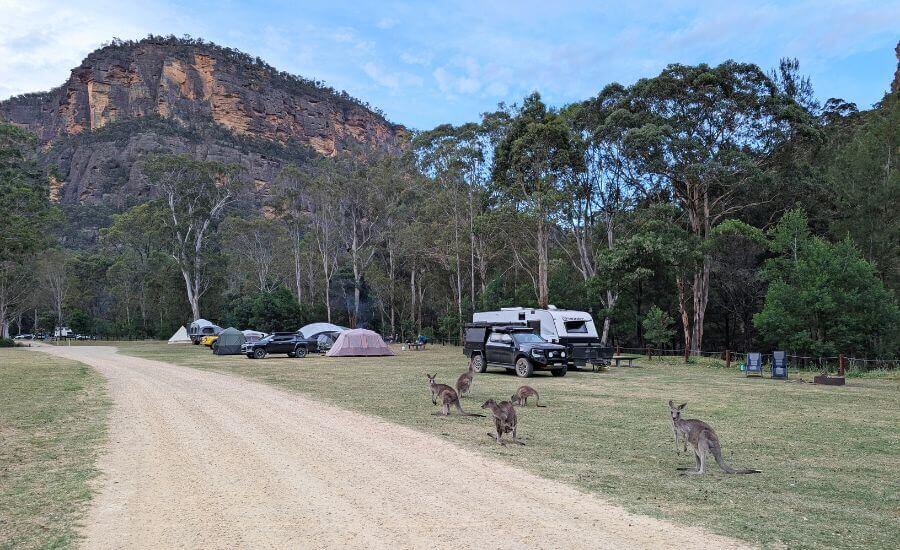
Coorongooba sits beside the Capertee River, surrounded by towering red cliffs. Large grassy meadows let you choose your own unmarked campsite, and at sunset the kangaroos wander through as if they own the place.
It’s remote — but surprisingly family-friendly.
Kids can splash in the shallow river sections, explore the riverbank bush track, and fall asleep to complete silence. And the view… honestly, just bring a chair, sit in front of your tent, and watch the cliffs change color as the sun drops.
Facilities:
- Toilets
- BBQs and picnic tables
- Unmarked campsites
- No drinking water
Bring everything you need, including plenty of water. Warm layers make you more comfortable at night, and reliable lighting makes a real difference.

Ganguddy–Dunns Swamp Campground
Getting to Dunns Swamp takes time, but the drive is straightforward. The road is unsealed, yet usually well-graded in dry weather, and a standard vehicle handles it fine if you drive carefully.
The campground sits along the peaceful Cudgegong River, and this is where Wollemi becomes surprisingly social. Local families love this spot. You’ll see canoes gliding across calm water, kids fishing from the riverbank and camp stoves brewing early morning coffee beside the river.
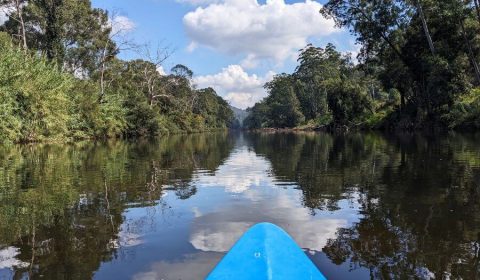
If you have access to a canoe or kayak (or rent one locally), this is one of the most beautiful paddle spots in the region.
Book early during school holidays — this one fills up quickly.
Facilities:
- Toilets
- BBQs and picnic tables
- No drinking water
As with Coorongooba, you need to be fully self-sufficient. Pack water, food, and anything you might need — there are no nearby shops.
A Few Practical Tips for Wollemi

- Download offline maps before leaving town, or have your detailed regional paper map with you
- Check road conditions after heavy rain
- Bring extra water
- Don’t rely on mobile reception
- Start your drive early — gravel roads are slower than they look on GoogleMaps
Wollemi isn’t difficult, but it rewards preparation. And in return, it gives you something rare: space, silence, and that feeling of being immersed in true wilderness.
Kanangra‑Boyd National Park (dramatic & underrated)
Best for: Experienced hikers, cliff‑top views, waterfalls, dramatic escarpments and multi‑day adventures.
Kanangra‑Boyd feels wilder and far less developed than the main Blue Mountains National Park. Fewer facilities, fewer people — and a lot more raw landscape.

Camping here is basic and best suited to:
- Self‑sufficient campers
- Bushwalkers
- Those comfortable without amenities
The scenery is extraordinary. Wild cliffs plunge into deep valleys, waterfalls cascade through untouched bushland, and you can stand on vast plateaus with almost no one else around.
It’s not polished, no. And that’s exactly the appeal.
Boyd River Campground

Boyd River Campground is the most accessible camping option in the park and can usually be reached in a 2WD vehicle during dry conditions. The final stretch is unsealed, so take it slow and check road conditions after heavy rain.
The campground itself is small and peaceful. You camp beneath majestic snow gums, and at dusk the wildlife comes out quietly.
Wallabies graze near the trees — but keep your distance. These aren’t the relaxed kangaroos you see near Glenbrook. They’re shy and properly wild. If you’re patient and quiet, you might also spot wombats, kangaroos, sugar gliders, and brush‑tail possums.

And if wildlife watching isn’t enough? This park is all about walking.
The Kanangra Plateau walk is straightforward and incredibly scenic. The short descent to Kalang Falls is rewarding, while Morong Falls and Box Creek Falls are far less visited — which often means you’ll have them entirely to yourself. It also means you need to navigate confidently.
Mobile reception is unreliable here, and trails aren’t always heavily signposted. Before heading out, download offline maps and carry a proper topographic map. Detailed regional maps, such as Hema’s Mid North Coast NSW map, are extremely helpful, especially if you’re exploring lesser‑known tracks.
If you’re planning longer hikes or multi‑day trips, some experienced bushwalkers also carry a satellite communicator for added peace of mind. Compact devices like the Garmin inReach Mini 2 allow two‑way messaging and emergency SOS via satellite. It’s not necessary for short campground stays, but for extended remote hiking it can be reassuring.

the unsealed road in Kanangra‑Boyd National Park
Facilities at Boyd River Campground:
- Toilets
- BBQs and picnic tables
- Unmarked campsites
- No drinking water
Bring everything you need, including sufficient water and warm layers. Nights here can get very cold, even outside winter.
It’s not the campground to test brand‑new ultralight gear for the first time. Being sturdy and well-tested camping gear.
Understanding the Greater Blue Mountains area
The World Heritage–listed Greater Blue Mountains includes:
- Blue Mountains National Park
- Wollemi National Park
- Kanangra-Boyd National Park
- Gardens of Stone
- Jenolan Karst
- Yengo National Park
- Nattai National Park
- Thirlmere Lakes
Most first-time visitors camp in Blue Mountains National Park, but the surrounding parks offer quieter and more remote alternatives. See them here, along with the mentioned campgrounds:
Campervan or tent? (What I tell friends visiting from overseas)
If you’re flying into Sydney and don’t want to pack gear, renting a campervan is incredibly convenient. You can compare campervan rental prices from Sydney here (JUCY is popular for budget travellers).
If you’re just driving up for a few nights and planning to book cabins, compare standard car rental options here.
Having your own vehicle gives you flexibility, especially if you want to explore quieter trails like these leading to stunning rock formations.
What it costs to camp in the Blue Mountains

These are estimations based on our experience. Please check exact current rates before booking.
National park campgrounds:
- 6 AUD for most campgrounds with basic facilities in this guide (they’re technically free, the 6 AUD is a one-time registration fee, not per night or per person)
- ~25 AUD per night per site for Euroka campground
Holiday parks and cabins:
- Powered site: 70-85 AUD\per night\per site
- Cabin: 150-190 AUD\per night
- Room: 120-180 AUD\per night
Campervan rental (daily rate): 80-140 AUD\per day depending on season, campervan type and length of rental
Car rental from Sydney: 26-33 AUD\per day depending on season and model
School holidays and long weekends book out fast, so reserve early.
Camping with kids in the Blue Mountains

We’ve camped here with a toddler, a preschooler and so on (years just fly by), and yes, it’s doable and enjoyable.
My honest advice:
Choose:
- Ingenia Nepean River for facilities
- Katoomba Tourist Park for central location
- Euroka for wildlife
- Coorongooba for scenery and solitude
Maybe avoid remote 4WD-only campgrounds for your first family trip. 🙂

Gear that genuinely makes a difference:
- A quick‑setup dome tent with a vestibule (extra space saves sanity)
- Self‑inflating sleeping mats (the ground gets cold, even in summer)
- A rechargeable LED lantern (safer inside tents)
- Foldable camp chairs (you’ll want somewhere comfortable after hiking)
And if you’re looking for more kid-friendly walks around Sydney beyond the mountains:
Looking for more family-friendly walks near Sydney?
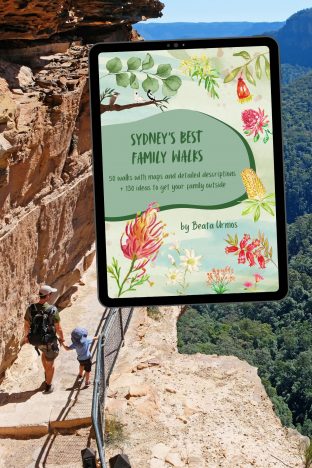
If you loved exploring the Blue Mountains with kids, you’ll love my ebook Sydney’s Best Family Walks.
It includes:
• 50 kid-tested trails
• Parking + difficulty details
• Pram access info
• Unique “Play Factor” notes
• 130+ bonus nature play ideas & printables
Make your next family adventure simple and stress-free.
Navigation & maps
Mobile reception disappears quickly once you leave town.
If you’re heading toward remote areas like Burralow Creek or planning a longer road trip, offline navigation is essential. Hema Maps offers detailed Australian mapping and trip resources that are updated by their on‑ground map patrol team.
You can explore Hema regional maps here.

Do you need a dedicated off‑road GPS?
For most campers staying inside Blue Mountains National Park, downloading offline maps on your phone or taking a paper map is enough.
However, if you’re planning extended trips into remote areas like Wollemi or Kanangra‑Boyd, especially via 4WD tracks, a dedicated off‑road GPS can offer extra peace of mind.
Devices like the Hema HX‑2+ GPS Navigator are built specifically for Australian conditions and come preloaded with detailed off‑road mapping.
It’s definitely an investment, and not necessary for most visitors. But for serious remote explorers it can be a valuable tool.
You can explore the Hema HX‑2+ specifications here.

Remote camping safety
Inside Blue Mountains National Park near Katoomba, patchy reception is usually manageable. But in places like Wollemi or Kanangra‑Boyd, you should not rely on having a signal at all.
For most people on short trips, it’s fine. Let someone know your plans. However, if you’re planning multi‑day hikes, solo travel, or exploring very remote tracks, a satellite communication device can add real peace of mind.
Compact devices like the Garmin inReach Mini 2 allow two‑way messaging and emergency SOS via satellite, even when there’s no phone reception.
You can read more about the Garmin inReach Mini 2 here.

Best time to camp in the Blue Mountains
One of the lovely things about the Blue Mountains is that you can camp here year‑round, you just need to know what to expect.
As someone who camps here in every season, here’s my honest breakdown.
Summer (December–February)
Best for: Swimming holes, riverside camping, long daylight hours.

Summer is wonderful if you’re staying near water. Places like Glenbrook or Wollemi feel magical when you can cool off in a nearby river.
But here’s the catch: ridge trails can be brutally hot. Many cliff‑top walks are exposed and offer very little shade. They’re stunning, yes, but midday summer heat can make them uncomfortable, especially with kids.
If you’re camping in summer:
- Choose riverside campgrounds
- Start hikes early
- Book well in advance — school holidays fill up fast
Even in summer, nights can be surprisingly cool, so always pack layers.
Autumn (March–May)
Best for: Perfect hiking temperatures, quieter campgrounds.

Autumn is one of my favorite times to camp here. The air is crisp, the crowds thin out, and daytime temperatures are ideal for both hiking and camping.
This is when you can comfortably tackle exposed ridge trails without overheating. Cool nights make campfires (where permitted) extra cosy.
If you want that balance of comfortable days and manageable nights, autumn is hard to beat.
Winter (June–August)
Best for: Dramatic cliff walks, peaceful campsites, moody misty mornings.

Winter in the Blue Mountains is beautiful — but cold. Night temperatures can drop below freezing, especially in higher areas like Blackheath and Kanangra‑Boyd. Snow is rare, but not impossible.
I wouldn’t camp in a tent here in the winter, but if you do, make sure your sleeping setup is properly insulated. This is one season when many prefer a campervan or a cabin instead of a tent.
The upside? Those exposed ridge trails that are too hot in summer are absolutely glorious in winter. Just bring serious windproof layers.
Spring (September–November)
Best for: Wildflowers, ideal hiking and camping conditions.

Like autumn, spring offers that sweet spot for camping: warm days, cool nights, and great walking conditions. And the wildflowers begin to bloom.
This is when you’ll see the iconic red New South Wales waratah lighting up the bush. Ridge trails are spectacular this time of year: colorful, fresh, and far more pleasant than in peak summer heat.
So when is the best time overall?
For a balance of comfortable hiking and enjoyable camping, autumn and spring usually offer the best conditions.
Summer is wonderful near water, but plan ahead.
Winter is magical if you’re prepared for cold nights.
No matter the season, always pack warm layers. The Blue Mountains sit at elevation, and temperatures drop quickly after sunset.
FAQ

Do you need to book Blue Mountains campgrounds?
Yes. All NSW National Park campgrounds require reservations, even the free campgrounds.
Is free camping allowed in the Blue Mountains?
Not within the national park. Use designated campgrounds only.
Are there showers at Blue Mountains campgrounds?
National park sites usually do not have showers. Holiday parks like Ingenia do.
Is camping safe in the Blue Mountains?
Yes. Wildlife is generally harmless. Store food properly and follow park rules.
Are campfires allowed?
Often restricted due to bushfire risk. Always check current park alerts before lighting any fire.
Do you need a 4WD?
Only for certain remote campgrounds like Burralow Creek. But even the majority of the remote campgrounds are approachable in a normal car.
Final thoughts

Camping in the Blue Mountains slows everything down in the best possible way. You’ll start your hikes earlier, see more wildlife, and feel connected to the landscape — not just visiting it.
If you’re planning your hikes too, read my Blue Mountains hiking guide here.
And if you’re thinking about canoeing, the Colo River is such a good spot — read my Colo River canoeing guide.
Leave a Reply